Friday

God and Art Series: Artist's work puts her in touch with Creator


Anyone who has spoken to Daphne Seaman long enough soon realizes that she is as vivacious and energetic as her artwork.

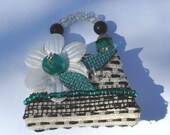
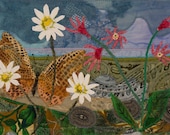
Daphne, an artist who works mainly with polymer clay, owns Laurel Tree Studios on Etsy and fashions crosses, jewelry, wall art - even Rock and Roll Record art. While creating her work she feels a connection with her Creator.

"For me," Daphne says in her profile on Etsy, "the act of creating puts me in touch with my Creator God. The use of polymer clay in my art is the most recent means of expression that began with ceramics and fiber arts. I am passionate about 'junk,' scraps, and found objects, too. I love to recycle these into my art. The range of color possibilities in polymer clay and the intricate patterns made with millefiori techniques constantly amaze me. Polymer clay gives a voice to a playfulness in my spirit and captures my delight in life - in color, texture and form."

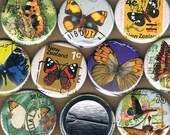
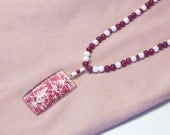
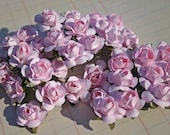
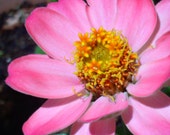
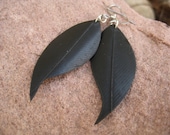
Here are some of her favorites:


Beauty from Pain

Daphne started her business on Etsy amidst a painful separation from her husband of 33 years.

"I opened my Etsy shop in January 2009, and although this was an exciting adventure, almost immediately I found myself in a very distressing situation: separation after 33 years of marriage!" she says. "My Etsy shop was the last thing on my mind, and I never worked at it. It sat empty for many months. I concentrated on getting my art into galleries and cute boutiques. In January 2012, my son Michael encouraged me to change my focus to work on my Etsy shop. I'm trying! I have a huge following of local fans who love to style my wearable art, and I am hoping that Etsy will become a world-wide stage for Laurel Tree Studio!"

Daphne has three sons, Christopher, 29, Stephen, 26, and Michael, 24. According to her shop banner, all three sons have Etsy shops as well. Here they are:


Early influences

Daphne's fascination with color began at an early age and continued into adulthood. "I think I was always more interested in color and art than playing with dolls or toys. My mom said that as a toddler, she could sit me in the driveway with a box of crayons, and I would color for hours! No cars came to this part of the driveway!" she says. "I was an art major in college. I did pottery for many years, and tried to keep at it while doing my mommy/wifey duties. Three very active boys who loved to be creative kept me busy. I had just discovered polymer clay when my husband and I moved to Belgium, and it was a Godsend because I could not take my potter's wheel or kiln. When I started working with polymer clay and realized how fun it was, I gave up pottery altogether. Like I said, I feel very in touch with my Creator when I am creating. I think creativity is a gift from God and I feel blessed every time new ideas come to me."

She was also influenced as a child by "godly parents" and a "faithful grandmother." Relationships held during childhood still influence her activities today, such as becoming Teaching Director for Community Bible Study, an offshoot of Bible Study Fellowship.

"I grew up in a tiny town--Cowan, Tennessee and was part of an original "gang!" (just kidding) There were a group of girls --seven of us--and the whole town called us the 'seven sisters.' There was hardly anything to do in rural Tennessee except lots of hiking, biking and playing. Out of the seven sisters, there were six different churches represented! Whoever you spent the night with on Saturday night, that's whose church you went to. Looking back on this, I think God knew all along, he would have me teaching a non-denominational Bible study group because I loved all the churches. I felt comfortable and loved in all of them," Daphne says.

Not only does she share about God in the regular Bible studies, Daphne uses her art as a witness as well. "God has always used my creativity and crafts as a witnessing tool, because when people want to talk about clay, I just naturally speak of the source of my creativity, too! You cannot be around me for long without hearing about what God is doing in my life. He is a friend. I give Him lots of credit for inspiration and guidance. I often have lots of scripture in my work. I make a lot of crosses-wearable art, and wall art crosses. I name my art with scripture references. Talking about God is as natural as breathing, and he just leads the conversation. I think I'm a good 'listener' and try to follow his lead!"

Here are some of her crosses:


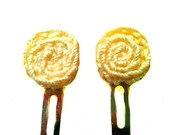
Laurel Tree Studio also offers flowers, beads, scarf pins and hair pins. Be sure to check it out. Right now, Daphne is offering a 15 percent discount. At checkout just enter GROOVY15%.

Next Friday, I'll feature Agnessa from Icons Art in the God and Art series.

Thursday

New jewelry at Two of Hue

Guess what, friends. Mary of Two of Hue informed me that her shop is open again. I wrote a post about her Symbol of Life necklace the other day.


Here's some of her new eco jewelry:


Pretty, huh?

To make her jewelry, Mary said that she bought "some miscellaneous lots of pieces and broken jewelry combined with newer findings (jump rings)." From that point she looks at the pieces until she comes up with some ideas. Here's what Mary had to say about the Ben Franklin necklace: "The Ben Franklin coin I bought as well as the chain and coin holder, replaced the older style clasp with a new one. This necklace feels good on, very substantial."

As I said before, Mary also specializes in upcycling everyday objects, like plastic bags and denim, to turn them into something useful and special. Hop on over to Two of Hue and take a look!

Wednesday

Glorious spring ...

It's spring!

Well, not officially, but the daffodils are blooming, the birds are singing and shades of green are beginning to appear on the prairie.

We rode our bikes last night in the first warm weather we've had and it was glorious. You can see some of the places we ride here: http://writingplaces.com/cycling/cycling.html

In honor of spring and the joy it brings, I just wanted to share Psalm 148 with you:

Praise the LORD.
Praise the LORD from the heavens;
praise him in the heights above.
Praise him, all his angels;
praise him, all his heavenly hosts.
Praise him, sun and moon;
praise him, all you shining stars.
Praise him, you highest heavens
and you waters above the skies.
Let them praise the name of the LORD,

for at his command they were created,
and he established them for ever and ever—
he issued a decree that will never pass away.
Praise the LORD from the earth,

you great sea creatures and all ocean depths,
lightning and hail, snow and clouds,
stormy winds that do his bidding,
you mountains and all hills,
fruit trees and all cedars,
wild animals and all cattle,
small creatures and flying birds,
kings of the earth and all nations,
you princes and all rulers on earth,
young men and women,
old men and children.
Let them praise the name of the LORD,

for his name alone is exalted;
his splendor is above the earth and the heavens.
And he has raised up for his people a horn,
the praise of all his faithful servants,
of Israel, the people close to his heart.
Praise the LORD.


Have a happy day!

Tuesday

Identifying with heritage

When I have a spare moment, I like to troll around Etsy to see what's for sale and to see if anyone likes what I'm doing at Writing Places. I have a lot of fun with it. There are so many talented people and it's neat to see what they're doing.

I especially enjoy looking at items that artists and crafters have fashioned from everday things that we have laying around the house. So naturally when I saw a huge laundry tote crocheted from plastic shopping bags, I had to take a look at the shop. That's when I found Mary at Two of Hue. Mary's shop is on vacation right now, but she says that she is in the process of making some eco-chic jewelry.

This is what I got from her:


Isn't it neat? When I suggested that Mary put another one up on her site, she said she couldn't because this necklace was one of a kind. Mary designs and constructs her jewelry from parts of other upcycled jewelry, so each piece tends to be unique.

Mary calls this necklace Sign of Life. It caught my eye because the fish is the ultimate symbol of life in Christianity. This symbol, called the ichthys, the Greek word for fish, was used by early Christians to identify themselves to other Christians. The letters in Ichthys also form an acronym that means Jesus, Son of God, Savior. Do you see why I call it the ultimate symbol of life?

There is some speculation as to why Christians chose to use a fish as their symbol.

The New World Encyclopedia says that it was in protest of the emperor Domitian, who, like other Roman emperors, called himself a son of god. This would have put Christians in direct conflict with Rome; indeed, many Christians died because they refused to acknowledge the emperor as the son of god.

The encyclopedia also says that the fish could refer to "fishers of men" - what Jesus said his disciples would eventually be. It could also refer to Jesus feeding the thousands with a few fish and loaves of bread.

Early Christians may have borrowed the symbol of the fish from the pagan culture that surrounded them, much like they did with symbols of Christmas and Easter. In other cultures as well as in Christiandom, the fish is a symbol of life.

Whatever the reason, I felt while wearing this necklace, that I was identifying with hundreds of years of tradition. I was pleased to be identified with such brave people in my faith's history. I hope that I can live up to their example.

Thursday

The thing about enemies

Lately, I've developed an affinity for the Military Channel. It's not that I enjoy war that I like the Military Channel so much. It's because I enjoy history. The channel is rich with historical shows on World War II and other eras, but WWII is my favorite time period to study.

It's my favorite because the time was so complex and difficult, and I am continually amazed by the spirit it took people fighting against what must have seemed almost insurmountable evil to survive.

There were many victims in the war. Last night I watched what I could of the slaughter of Jewish people in Latvia - a country we don't hear much about. By the time the show was halfway through I was quite sad and turned it off. What a senseless waste of lives - lives that God held dear.

In modern times we have this news summary from Crosswalk:

Boko Haram Calls for War to Annihilate Nigerian Christians

The African Islamist terror group Boko Haram announced Sunday a "war" on Nigerian Christians and said it would launch a series of coordinated attacks to annihilate all Christians living in the northern parts of the country, the International Business Times reports. An unnamed Boko Haram spokesman reportedly said, "We will create so much effort to end the Christian presence in our push to have a proper Islamic state that the Christians won't be able to stay." Boko Haram has claimed responsibility for a series of increasingly frequent and increasingly violent attacks against churches and individual Christians in Nigeria. The Nigerian government has pledged to crack down on the terrorists, but it "cannot be prepared for what is to come," the Boko Haram spokesman asserted.

Read the news article here

Will the killing never end? What does it take for people to get along?

Jesus must have recognized the inevitable fact that people will always have enemies here on earth. Fortunately, the majority of us in this country - exceptions such as the westward expansion, slavery, and the aftermath of both notwithstanding - have not had to deal with enemies like our brothers and sisters face in other parts of the world. Most of us can admit that there are people that give us a pain between our ears every day. There is the relative you may not like, or the neighbor who harasses you. There might be a co-worker who is jealous of you, or there might be a co-worker of whom you are jealous. At any rate, there will always be people that do not strive for our best interests. We can reasonably consider these people as enemies.

Yet, Christ says to forgive them. All of them. In fact, we're supposed bless them, and pray for those who persecute us. There's no getting around this. Jesus didn't mean something else which was muddied in translation. He meant what he said and said what he meant.

A quick glance through literature from Christian history proves this. The early church fathers and mothers wrote about forgiveness and praying for enemies. Here is an excerpt from an Orthodox prayer that I came across recently:

Lord Jesus Christ, who commanded us to love our enemies and all those who insult and hurt us, and to pray for them and forgive them; you yourself prayed for your enemies, who crucified you. Give us, we pray, a spirit of Christian reconciliation and meekness, so that we may forgive every injury and be reconciled with our enemies. Grant us Christian meekness and true love of our neighbor. Give to our enemies true peace and forgiveness of sins; and do not allow them to leave this life without true faith and sincere conversion. Help us to repay evil with goodness. -- adapted from the Orthodox "Prayer for Enemies"

I also found an exercise in "Lent and Easter: Wisdom from St. Benedict" that was useful. The author encouraged readers to make a list of those they considered enemies. In this exercise, the author challenged readers to go through the names and ask God to bless each one.

Because I have struggled in this area I decided to try it. I didn't write anything down but I decided to pray for anyone I saw with whom I've had a conflict - it was not difficult because I live in a small town and I once worked as a writer for the newspaper. It's a sad fact that expressing a viewpoint contrary to that of the majority, or contrary to that of the 'ruling class' can lead to that kind of thing. Anyway, when I saw someone in that group I just prayed that God would bless them. I left off biting commentary about the Lord helping them to see the error of their ways. And, do you know what? The exercise helped take the edge off. I'm okay with those people now. I still don't like what they do but I know that I can pray for them and let God handle them in a way that he deems best. Handling them is not my business anyway, it's God's.

I wonder what would happen if we Christians actually did these sorts of things routinely? Would it leave us weak? Would we become doormats? I think not. Instead, I believe we would become stronger and able to bear anything with grace and love. There might actually be people who bless God and turn to him because of our love. What do you think?

As for the Nigerian Christians, please pray for them. They are facing a difficult time. Pray also for the Islamists who seek to murder them and drive them from their homes. Pray for the strength of the Nigerian government as they try to protect their people. While you're at it, thank God that we do not face this type of persecution in America. Ask God to keep America strong so that we can continue to help others.

Have a great day.

Wednesday

Lent Day 13: Christ in everything

I like this prayer by St. Patrick:

Christ with me, Christ before me,
Christ behind me, Christ within me,
Christ beneath me, Christ above me,
Christ at my right, Christ at my left,
Christ in the fort,
Christ in the chariot seat,
Christ on the deck,
Christ in the heart of everyone who thinks of me,
Christ in the mouth of everyone who speaks to me,
Christ in every eye that sees me,
Christ in every ear that hears me.

-- from the prayer of St. Patrick


You can read about St. Patrick here.

I bring you this prayer not to talk about St. Patrick, although his life was very interesting. I bring it to you to talk about something that is on my heart regarding Christ being the most important thing in our lives, so much so that he rubs off onto everything we do. While fasting for Lent, I have learned about my dependence on physical things like sweets and have tried to replace them with a dependence on Christ. It sounds kind of silly to pray when I crave sweets, but it does help move me through those few moments and it helps someone else while I'm doing it because I try to pray for others.

Mike and I saw a real example of living in Christ when we visited the Benet Hill Monastery. Most of the nuns ... the sisters of the Order of Saint Benedict ... live together in the monastery, though some live in the Colorado Springs area where they conduct their ministries. They are not a cloistered house, and have not worn the traditional habit since Vatican II. They live by the Rule of Benedict, which is centered on the application of Scripture to life, and particularly on life in community with others. The sisters work for the common good, helping each other, and working so that the monastery is self-sustaining. Everything they did was for the common good, such as complying with Benedict's rules on promptness, subordination to the authority of the prioress, making decisions a community process. They craft, do needlework and make breads and jellies and sell them in the bookstore so that the community can support itself. They also run an extended health care community, a library, and provide classes in spiritual direction. They host retreats and provide meeting places for an eclectic representation of most, if not all, of the faiths, Christian and non-Christian, in the area. In the past they have been teachers, but since the closing of the school some years ago, they've had to change what they do in order to keep their ministry vital.

The most meaningful time to me, during our weekend stay, was at Vespers, or evening prayers. During this time, the sisters sang, or chanted, the Psalms and other scriptures responsively. Everything was in English so I could understand and they let Mike and I join along. They also helped us find what pages we needed to turn to and told us how everything worked. As we prayed, it was a beautiful time of praising God with the word and I could feel the Holy Spirit there among us.

We also joined the sisters for lunch and had a very nice time talking with a few of them. I also noticed that the first two sisters who sat at our table sat right next to us on either side rather than across from us as is common for most people.

Even though we visited the monastery about a month ago, I have not written much on it. It has taken a while to digest everything. The sisters "rubbed off on me" in more ways that I imagined; the trip affected me deeply. If you want to see some pictures from our visit look at our photo gallery on WritingPlaces.com. As you can see from the pictures, it snowed and although the snow buried the labyrinth and the Stations of the Cross walk, we were still fed by the Spirit. There was just something about the quietness and solitude of that place that filled my soul with peace.

One of the gifts that St. Benedict encouraged in his rule was hospitality. He said that "all guests who present themselves are to be welcomed as Christ." As far as we're concerned, the sisters fulfill this mission. We left Benet Hill Monastery with changed hearts and we would like to return sometime.

Friday

Lent: Day 9: The Cupcake Wars

Good day, everyone.

Well, Lent has been an interesting time so far. You remember at the beginning my husband and I agreed to give up junk food - chocolate, cake, cookies, soda, chips, etc. This is the first time I've done anything like this so I thought I'd share my journey a bit. Does anyone out there have a Lent story they'd like to share in the comment section?

I think the greatest challenge so far during this season has been the grocery store. We Americans sure have it good, you know? Seems like every time I turn the corner in the store junk food is staring me down. Calling. Yesterday, Mike and I went to Walmart after work to pick up some bread and veggies for spaghetti sauce. I told him that I would get the bread, not thinking that the bread was in the bakery section. Oh my! What treasures met my eyes. I had to keep looking away from the beautifully decorated cupcakes, the chocolate chip cookies and, oh - how cute! - shamrock sugar cookies. It was almost too much, especially when I saw that there were cake samples.

And then an action from the book we're reading, Lent and Easter: Wisdom from Saint Benedict came to mind.

It said: "(Saint Benedict's Rule) recognizes that a healthy human being does not give into every desire for pleasure. Consider denying yourself some little pleasures throughout this season ... Take note of these things that you would like to do or have but can do without and, as you pass them by, say a prayer for the greater awareness of God, and God's suffering children, at that moment."

So, I prayed, as I passed the cupcakes by that God would be with all those kids who didn't have food to eat. Suddenly, my desire for sweets was not that important.

This morning, Mike and I were talking about Lent and he mentioned that we had it pretty easy if we were "suffering" from giving up junk food and I agreed. However, sacrificing for Lent means more than that. It's also a time to bring yourself under God's control and a time to practice a little self-control. We really do this for our spiritual welfare, not to lose pounds or make ourselves miserable. It gives us a chance to concentrate on better things.

Therefore, joy is completely possible without chocolate.

Did I just say that??

Last week Mike joked about giving up coffee during Lent next year. Hmmm ... that's something I'll really have to think about.

Thursday

Church/State issue takes center stage again

Presidential candidate Rick Santorum has triggered one of my hot buttons. I was going to write more about Lent but perhaps this season is a good time to examine a volatile issue in American politics, which divides Christians and hurts the conservative vote.

The issue is the separation of church and state. The current mainstream conservative and liberal understandings of this issue are incorrect. In a nutshell, the conservatives believe that this country was founded on Christian principles; therefore, this country should be ruled by Christian thinking - it should be a "Christian" nation.  Liberals go the other way, believing that church and state should never be mixed. The case going on in New York City regarding whether or not churches can rent public school buildings is an example of liberal ideology.

To see what Santorum is saying on this issue, check out this article:

Santorum: Separation of Church and State Not Absolute; Obama Is 'Snob'

A quote:

"I don't believe in America the separation of church and state is absolute," Santorum told host George Stephanopoulos. "The idea that the church can have no influence or involvement in the operation of the state is absolutely antithetical to the objectives and vision of our country. This is the First Amendment. The First Amendment says 'free exercise of religion,' that means bringing everybody, people of faith and no faith into the public square. Kennedy for the first time articulated a vision saying faith is not allowed in the public square."

Santorum was referring to a speech made by then presidential candidate John F. Kennedy, who, if elected, would become the first Catholic president in American history. Santorum says that Kennedy's speech, which was meant to calm frayed Protestant nerves at the time, "... makes me want to throw up."

The thing is that Kennedy's speech says nothing about faith not being allowed in the public square.

You can hear it for yourself here: Kennedy's speech.

Here's a snippet from that speech:

But let me say, with respect to other countries, that I am wholly opposed to the state being used by any religious group, Catholic or Protestant, to compel, prohibit, or persecute the free exercise of any other religion.

Kennedy understood that the First Amendment offers not only protections for individuals to practice their religions without interference from the state, but also the converse: that the state is to be free from interference from religion.

Here is another excerpt:

Whatever issue may come before me as President--on birth control, divorce, censorship, gambling or any other subject--I will make my decision in accordance with these views, in accordance with what my conscience tells me to be the national interest, and without regard to outside religious pressures or dictates. And no power or threat of punishment could cause me to decide otherwise.

Read the full speech here.

In his speech, Kennedy says that he would rely on his conscience to help him decide matters of national interest. As a boy, his conscience was heavily influenced by Catholicism, so in effect, Christian teaching would be used to shape his decisions. And this is where religion and the state should meet - in the conscience of each of us as individuals. It should not be otherwise.

This is where the Founders intended the two to meet: in the lives of the people who ran the representative government by their vote. As long as the people who governed America wanted a moral government that relied on Christian values that's what they would have. However, they did not want a religious institution or group to govern the country as was the case in many of the European countries from whence they came.

In England and other countries, your religion was based upon the religion of the monarch. If it was otherwise, it was at your peril.  If the monarch happened to be a Protestant then the country was Protestant. Catholics were not tolerated, often to the point of brutal and savage death. It was the reverse if the monarch happened to be Catholic.

Unfortunately, this was happening in America as well. The Puritans did not tolerate any other religion than their own brand of Christianity. They fled Europe to avoid persecution, but they did not in the least mind persecuting others. In our nation's early days, before we became a nation, Christian churches had no compunctions about persecuting other Christians of the 'wrong' denomination. While that statement may drive Glen Beck to a state of apoplexy, it is well-documented fact, not 'revisionist history.' This is when the Founders began to write on this issue and these writings shaped our country's political thought.

We see an example of religion controlling the state in today's world, in the Middle East, with sharia law.  There are many Christians in Muslim countries who are being persecuted and killed because they refuse to renounce their faith. We also see Muslims killing other Muslims for not being the 'right kind' of Muslims - Sunni against Shi'ite. Is this what we want in America for anyone? Isn't it better that Muslims are free to worship the way they want and Christians and Jews are allowed to do the same? And atheists, who should be free to worship anything or nothing at all?

Yet, in spite of historical and modern examples, many Christians in our country insist that the nation should be run by Christian government when history shows that our Founders borrowed thought from the Romans, Jews, Greeks, Christians and others.

Why don't we get this? Why are we Americans allowing good debate on the important issues - like the economy, like education of our kids, like healthcare - to be usurped by an issue that shouldn't matter? Why is this so important for conservatives? They need to refocus because the non-issue has pretty much killed their political viability in my book. After 22 years as a registered Republican, I am giving serious consideration to becoming an Independent.

Tuesday

Lent: Day 6. No one is comparable to Christ

I read this quote this morning on Bible Gateway's Lent devotional reading e-mail that goes out to people who sign up for it:

The Lord, though he was God, became man. He suffered for the sake of those who suffer, he was bound for those in bonds, condemned for the guilty, buried for those who lie in the grave; but he rose from the dead, and cried aloud:

"Who will contend with me? Let him confront me. I have freed the condemned, brought the dead back to life, raised men from their graves. Who has anything to say against me? I," he said, "am the Christ; I have destroyed death, triumphed over the enemy, trampled hell underfoot, bound the strong one, and taken men up to the heights of heaven: I am the Christ."

"Come, then, all you nations of men, receive forgiveness for the sins that defile you. I am your forgiveness. I am the Passover that brings salvation. I am the lamb who was immolated for you. I am your ransom, your life, your resurrection, your light, I am your salvation and your king. I will bring you to the heights of heaven. With my own right hand I will raise you up, and I will show you the eternal Father."

- Melito of Sardis, 2nd century church father

Saturday

Art and Christian Expression

As you can see from the sidebar of my blog, I have joined the Etsy community and am trying to sell handmade items on the side. This work is good for me. First of all, it's enjoyable. Second, it gives me a way to express myself and keep my commitment to life-long learning.

Art is also a way to express one's faith. Recently, I posted these matchboxes on Etsy. They are favors and would be nice to insert in an Easter basket or to just give out at Easter. They hold a small piece of candy (mini-candy bars are perfect) or a small gift. I made mine with crosses that symbolize different aspects of Christ:


This cross, with a heart in the center, represents the sacred heart of Christ. Love is at the center of Easter and it is the love in Christ's heart that makes our salvation possible.


This cross is purple and represents the kingship of our Lord Jesus.


This cross is white and represents the purity of Christ. He was the perfect sacrifice for our sin, like the spotless lambs that the Jewish people used to sacrifice to atone for their sins. The red sticky gem in the center represents Christ's blood that was shed.

Art can also be used to tell one's life story. Here we see an image that shows some of a mosaic that is hanging in the hallway at the Benet Hill Monastery. It tells the story of the nuns of the Order of St Benedict, but also of the house and how these particular nuns came to be at Benet Hill:


What can you see from this image that tells you about their story? The right side, not completely visible in this photo, illustrates through art and symbology significant to the order, the inspiration of Saint Benedict and the influence of his twin sister, Saint Scholastica. The central part of the mosaic illustrates the journey the sisters once made from the home monastery in Kansas to the Colorado Springs area, with the original house in the city. It also shows the importance of music and art in the nuns' lifestyle, with hands raised heavenward, reaching out for God.

Artists have been using images to tell their story for centuries. How will you tell your faith story?

Have a great weekend. I'll share more Monday.

Friday

Lent: Day 2

So we got through Ash Wednesday still committed to not eating junk food. Our definition of junk food includes chocolate, potato chips, Fritos, pop, candy, cookies, cake, pie, etc. I'm sure you get the idea. What we do allow ourselves to eat are things like tortilla chips and french fries (as long as they are included in a meal). We're just trying to get away from all that snacking on stuff that isn't good for the body.

Even the first day wasn't easy, however, because the lovely ladies at our town library gave Mike this because they are grateful for all the work he does on their computers:


This looks pretty healthy because it has antioxidants in it right? That's what Mike said. They're 'health food.' It was a not-so-subtle ploy, I think. It still has chocolate, although it's dark chocolate, which is healthier. I thought, "If I eat that on the first day, I'll be blowing it because if it's really good, I will want more." So we didn't. Mike was really good too. I even tested him by asking him if the pomegranate seeds were good. He was insulted that I would think that he would fall so soon.

Then, a few hours later, Mike and I went to Village Inn on a date. The kids had gotten me a gift certificate for my birthday and said that I should take Mike out. Thanks, guys! We had a great time, but it was free-pie-slice-night. Mike asked the waitress if she would wrap up our slices in a take-home container and she was quite happy to do so. We gave those nice, delectable pieces of cherry pie with the flaky, buttery crust to Jon and Stephen, who probably worked it off going downstairs to their rooms.

Ah, the day passed and we stayed true to our commitment.

Last night before I went to bed I read this:

"... Lent ... is not merely a time of giving up pleasures and dwelling on one's sins. The giving up of pleasures is intended to make one mindful of how easy it is to fall into bad habits or indulgent behavior. The sacrifices should lead to reform and to turning back toward the healthy and holy in one's daily life ..."


Pretty interesting, I thought. That was from this little book I picked up at the Benet Hill Monastery:


I thought the prayer at the end of the first chapter devotional was fitting:

God of all my days, guide me in this Lent, forgive me my past failings and help me to become more pure and holy by this special time of grace. May my efforts in this season lead to true and lasting changes for your greater glory.

Amen - so be it.

Thursday

Today is Ash Wednesday


Today is Ash Wednesday, the beginning of Lent. In the church today, many Christians will receive a mark of the cross on their foreheads in the ashes saved from palm branches used in the previous year's Palm Sunday celebration. The mark indicates that their sins are forgiven.

It is an appropriate preparation for celebrating the fasting and reflection that takes place during Lent.

A couple of years ago, I attended two Ash Wednesday services so that I could write an article. First, I attended the Catholic celebration. The place was packed, standing room only. I had to leave early in order to attend a smaller service at the United Methodist service. In this service the pastor gave quiet time for reflection and confession of sin. We did some responsive readings and the pastor talked a little. After this was over we went forward in a line and the pastor rubbed ashes on our foreheads and said that our sins were forgiven. It was very meaningful. I felt buoyant after the service.

Today, however, I will not go to an Ash Wednesday service because there are too many other things going on. In place of this I thought of some scriptures and songs upon which to focus. I thought I would share them with you. Their theme is forgiveness. If you can, take some time to go over them, reflect on what God has done for you and confess anything that hinders your relationship. Then be joyful and give thanks to God for his great love and forgiveness.

Beginning song:

Jesus, What a Friend for Sinners

Scriptures:

The Prodigal Son: Luke 15: 11 - 32


This is Rembrandt's great painting, The Return of the Prodigal Son, completed in the years just before Rembrandt's death in 1669. An excerpt from a critique by John F. Sawyer:

In the painting, the son has returned home in a wretched state from travels in which he wasted his inheritance and fell into poverty and despair. He kneels before his father in repentance, wishing for forgiveness and a renewed place in the family, having realized that even his father's servants had a better station in life than he. His father receives him with a tender gesture . . . Standing at the right is the prodigal son's older brother, who crosses his hands in judgment; in the parable he objects to the father's compassion for the sinful son:

But he answered his father, "Behold, these many years I have served you, and I never disobeyed a commandment of yours, but you never gave me a goat, that I might celebrate with my friends. But when this, your son, came, who has devoured your living with prostitutes, you killed the fattened calf for him."
—Luke 15:29–30


Whereupon the father responds:

"But it was appropriate to celebrate and be glad, for this, your brother, was dead, and is alive again. He was lost, and is found" (Luke 15:32).

I would also recommend The Return of the Prodigal Son: A Meditation on Fathers, Brothers, and Sons, by Henri Nouwen.

Zaccheus: Luke 19: 1 - 10

The Woman Caught in Adultery: John 8: 1 - 11

If we confess our sins, he is faithful and just and will forgive us our sins and purify us from all unrighteousness.


Ending Song:

It is Well With My Soul

Peace,

Lisa

Wednesday

Lent begins tomorrow

Hi, everyone. It's Fat Tuesday again, which means tomorrow is Ash Wednesday and the beginning of the Lent season. I began my celebration of Lent with a 490 calorie Mrs. Field's ice cream and chocolate chip cookie sandwich - my two favorite desserts besides chocolate - and washed it down with my favorite soda Pepsi Maxx. Unusual? Not really. Many Christians all over the world are using today and the weeks before Lent to eat things they will give up during Lent. And, Mike and I are going for it this year. No junk food for the next six weeks.

For us, this is a sacrifice.

But Lent is not really about sacrifice, it's about spiritual formation. People who celebrate Lent can give up a harmful habit (in our case eating junk food) or they can add something to their routine like prayer, community service, study, whatever. I plan to blog more during Lent, study and pray when I crave junk food. I'm hoping that it will be a time of growth.

Returning to our roots

I was born and raised a Protestant in what is called a "low church." This means that my church does not, according to the CRI Voice, follow a "prescribed order of service ... does not follow certain liturgical patterns, and does not make use of developed ritual, ceremony, or worship accouterments like vestments." We do not follow the church liturgical calendar. When I was growing up the only thing we observed Good Friday and celebrated Easter. I didn't even realize that people all over the world observed Lent until I was an adult. I didn't know that there was a whole six weeks of observances that I was missing. Am I going Catholic? Some may wonder since I recently visited Benet Hill Monastery for a retreat, but I'm not. I just want to return to my roots and celebrate in a way that Christians have celebrated for the last 1,800 years or so.

As I have grown spiritually, I realize that there is nothing wrong with wanting to return to my roots in the Christian faith. After all, Catholics are our brothers and sisters in Christ. Unfortunately, to hear some Protestants talk, Catholics are on a slippery slope to hell. I beg to differ with this opinion. On our trip to the monastery, I found that the sisters not only followed the biblically-based Rule of St. Benedict, they were also immersed in the scriptures. Even their liturgy of daily prayers were word-for-word scripture. Most Protestants cannot claim this. We are very much into free speech in prayer. There is nothing wrong with this either, I just think a balance is needed. This keeps us from blabbering and saying things that are not biblical. Maybe more on that later.

Lent is also a time of reflection. We remember what Christ did for us on the cross. This is important because reflection causes us to be grateful and gratefulness is the root of a good spiritual life. How will you spend your time during this six-week season? If you have a special routine or some questions post your comments below.

Tomorrow I'll post some suggestions on how to reflect during the season.

Tuesday

Tim Tebow, Dallas Willard and the Failure of Christianity

My husband Mike wrote this on his blog and I wanted to feature it on mine because I thought it was really good. We are both reading the Dallas Willard book (I highly recommend this author):

Here is an interesting excerpt from "The spirit of the disciplines: understanding how God changes lives":

... Christianity can only succeed as a guide for current humanity if it does two things.

First, it must take the need for human transformation as seriously as do modern revolutionary movements. The modern negative critique of Christianity arose in the first place because the church was not faithful to its own message -- it failed to take human transformation seriously as a real, practical issue to be dealt with in realistic terms. Fortunately, there are today many signs that the church in all its divisions is preparing to correct this failure.

Second, [Christianity] needs to clarify and exemplify realistic methods of human transformation. It must show how the ordinary individuals who make up the human race today can become, through the grace of Christ, a love-filled, effective, and powerful community.


Author Dallas Willard wrote that in the preface to the book.

It strikes me that Willard's 'many signs' are embodied in large part in the emerging church movement. Author Scott McKnight says of the emerging church movement:

Emerging churches are communities that practice the way of Jesus within postmodern cultures. This definition encompasses nine practices. Emerging churches (1) identify with the life of Jesus, (2) transform the secular realm, and (3) live highly communal lives. Because of these three activities, they (4) welcome the stranger, (5) serve with generosity, (6) participate as producers, (7) create as created beings, (8) lead as a body, and (9) take part in spiritual activities.

I thought that was what the church(es) have been supposed to be doing all along, but clearly, they have not, as we see by the declining numbers in America's conventional churches. There is too much hatefulness in these conventional churches; they have too much in them that is contrary to what Christ teaches. They may 'welcome the stranger', if the stranger is socially acceptable; they say they identify with the life of Jesus, but the most cursory examination shows they do not.

Broncos quarterback Tim Tebow has ignited the flames of controversy with his public worship and praying. It even has a name: 'Tebowing.'

Personally, I think young Tebow is sincere in his faith, and his demonstrations are merely a manifestation of that sincere faith. I cannot find any reason to agree with the multitudes of sports writers, analysts, announcers, and so on who have ridiculed him for his demonstrations. These are the same characters who have no problems in ignoring or winking at the criminal shenanigans of any number of professional athletes who, were it not for their favored status, would be candidates for a good stretch in the local prison system. Their ridicule of young Tebow is, however, another manifestation of the failure of Christianity to show '... how how the ordinary individuals who make up the human race today can become, through the grace of Christ, a love-filled, effective, and powerful community.'

Nonetheless, through his public displays, Tebow is divisive. First, how does he reconcile his demonstrations with Matthew 6:5: 'And when you pray, do not be like the hypocrites, for they love to pray standing in the synagogues and on the street corners to be seen by men. I tell you the truth, they have received their reward in full.'

In that statement, Jesus is not questioning the sincerity of those whom he is addressing. Rather, he is telling them not to behave like those who lack sincerity. That's how it reads to me. So why does Tebow go against the teachings of Christ? He is, isn't he? I don't think he is a modern-day Pharisee, so why would he want to demonstrate like one? What's the point? What is he hoping to accomplish?

How is this creating division? Most of us have seen the chain emails flashing around the 'net, like the one that has a picture of a group of Muslims praying in New York City or some other American metropolis, captioned, "Why is this OK?" It isn't a photo of crazed Islamic fundamentalists hanging dismembered bodies from bridges, or beheading a bound and gagged hostage. It's a photo of Muslims in America, praying peacefully. A second photo is of Tim Tebow 'Tebowing', and is captioned, "And why is this not OK?" At best the message is that Muslims, simply by being Muslims are committing a wrong by the simple act of praying, and at worst, simply by being Muslims, are evil, murderous creatures undeserving of the freedoms inherent in those truths we Americans supposedly hold to be self-evident.

Why is it OK for Muslims to pray in peaceful manner in New York City? Could it be because this is the United States of America? Why is it that the Christian Right just doesn't get this?

And who says it isn't OK for Tebow to 'Tebow'? A collection of media maggots? Has Tebow been stopped? Has anyone dragged him off the field for his demonstrations? Has he been imprisoned for it?

It's Christians passing this around.Evangelical Christians. People who claim to 'identify with the life of Jesus', yet who in their pathetically childish question, 'Why is this OK but this isn't' put the lie to Christ's New Commandment, in John 13:34-35:

“A new command I give you: Love one another. As I have loved you, so you must love one another. By this everyone will know that you are my disciples, if you love one another.”


How do these emails and their ignorant hyperbole fit in with John 13:34-35? The short answer is that they do not. And so the senders and forwarders of these things are hardly 'identifying with the life of Jesus', so when they get up at church on Sunday morning professing to be one with Christ, they may have credibility with their like-minded brethren, but they do not have any credibility with the unchurched, or with those of the church who ask, 'how does this fit in with a commitment to living a life for Christ?'

It doesn't, and that is why we have an emerging church movement, and a continuing drift away from the established church. Embracing Christ and his lifestyle is without doubt one of the greatest of human transformations, yet by using Tebow's public demonstrations of faith to take cheap shots at other 'ordinary members of the human race' who have done no one any harm is certainly no testimonial as to why one should become a Christian.

It also demonstrates that the church has a long way to go in correcting its failure.
What do you think?

Saturday

Reflections on the Christmas Story

When I was a child I was a "Little House on the Prairie" book series expert. I had read every book and was quite excited when the television series started. However, the more I watched, the more the series disappointed me because it really strayed from the story line of the books. This affected my enjoyment of the series. Had I not been an 'expert' because of my exposure to the books, the series probably would have been quite enjoyable standing on its own. But the longer the series continued, the more it drifted from the experiences of Laura Ingalls Wilder, and the thoughts and views she expressed in her writing about those experiences. The series was an imposter.

Most people feel that books are better than television or movie adaptations. TV and movie writers have to cut things out because too many details interfere with the visual flow of the story, and time constraints - and budget - limit the options. The only way to do a really well-written story justice in video format is to present it as a mini-series, or as a main production followed by sequels. Hollywood productions of the Christmas story are no different, and the book is definitely better.For the 2011 Advent season, I wanted to concentrate on the chapters in Luke and Matthew that dealt with the birth of Christ. I didn't bother with the genealogies. I concentrated on Luke 1 and 2 and Matthew 1:18 through 2. I read these chapters in sections and tried to put them in order as best I could. I then wrote in my journal detailing my thoughts about the scriptures. It was a great way to spend my devotional time for the month of December. Next year I want to research and add the prophecies, but that's for later posts.

To begin my study, and the Christmas season, I decided to watch a recently-produced DVD of the Christmas story called "The Nativity Story." The film is pretty well done as far as presenting the cultural milieu of that time. I really like the scenes before the birth of Christ; however, when it does get to the end of Mary and Joseph's journey to Bethlehem and to the birth of Christ I find the movie drifting further and further away from what biblical scholars tell us was a more realistic and more likely flow of events. In the video story, the writers had Mary in labor as soon as she and Joseph reached Bethlehem. That same evening, she was in the stable, delivered Jesus, and lo and behold, there were the shepherds, who must have really had their sandals flapping as they hustled to town after the angelic visitation! Meanwhile, on the day Mary and Joseph arrived in Bethlehem, the wise men were visiting with King Herod. They arrived at the stable almost as soon as the shepherds, with the screenwriters posing the group in such a way that it looks like an on-screen Christmas card. I found that to be a bit much, if the truth be known.

The wise men arrived just in the nick of time, with gifts that would help Mary and Joseph travel to Egypt that very night. In this film, Herod apparently figures very quickly that the wise men have tricked him, rather than determining this after the sages have made their trip to Bethlehem and back. So, that very night, when baby Jesus is not even 12 hours old, the old tyrant hands down his edict to slaughter male babies under two years of age. So in a mad rush, the script writers made everything that scholars tell us probably took quite a bit more time - years, possibly - in the scriptures happen in one night. And we can't point only at this video for this; most versions of the Christmas Story are very similar in sequence and timing of events.

If you like the movie I'm talking about, that's fine. I like it up until the very last scenes. However, if your kids or grandkids watch it I think there is good opportunity for discussion with them. They need to know that the real nativity of Christ and the events that took place surrounding it did not happen in a mad Hollywood rush. God actually took his time in allowing his child to be born. Luke 2:6 says, "While they were there, the time came for the baby to be born, and she gave birth to her firstborn, a son ..." It does not say "as soon as they arrived ...". The Holy Family also stayed in Bethlehem a while. Luke 2 says that Mary and Joseph took Jesus to Jerusalem to be circumcised on the eighth day like the Law required. The chapter also describes how Simeon and Anna told everyone within hearing distance that baby Jesus was the Messiah. Even though Jerusalem isn't that far from Bethlehem, we find that the Holy Family traveled to the Temple and returned to Bethlehem without interference from Herod. In fact, Herod had no clue that the Christ-child had been born until the wise men told him. Then, the wise men visited Mary, Joseph and Jesus in a house - "On coming to the house, they saw the child with his mother Mary, and they bowed down and worshiped him ..." Matthew 2:11. Matthew also refers to Jesus a child, not an infant.

The point at which the wise men actually visited either Herod or Jesus is difficult to determine, but the fact pattern presented in the Bible clearly does not point to this happening on the day and evening of Jesus' birth. As far as the timing goes for the flight to Egypt we cannot be sure. However, given that Herod's orders were to kill every male child under two years old, it would seem that Herod did not issue those orders the same night of Jesus' birth, and further, that Herod - and the wise men - were unsure of exactly when Jesus had been born.

These are details that may seem nit-picky, but I think they greatly affect the flow of the story, and the dynamics of the relationships of the players involved. The story really is about the birth of a child who will be the salvation of humankind - as well a threat to the established order within the existing religious structure, and culture, and to the power of the Roman empire - and all the drama that unfolds as these things become known throughout the land.

Wednesday

Hanukkah


Happy Hanukkah!


Today is the first day of Hanukkah. All over the world Jewish people will celebrate the Festival of Lights. It is a time of remembrance - it is a commemoration of the rededication of the Second Temple at the time of the Maccabean revolt in the second century BCE.


Read about it here.


Click here for readings and meditations on Hanukkah.

Saturday

The Christmas Crazies

A couple of years ago, I was diagnosed with an illness that I know I have had for some time. Is this illness contagious? Yes. Is it fatal? It could be, depending on how far advanced it becomes. Do I have to change my lifestyle? Yes. Is there a cure? I think so.

The illness is what I call the Christmas Crazies. I diagnosed myself with it a few years ago and I've been trying to overcome it ever since.

So what are the Christmas Crazies?

The Christmas Crazies are brought on by ... Christmas. The disease reappears each year before Thanksgiving (sometimes as early as September) and fully involves its victim by Black Friday. Its symptoms include both compulsively impulsive and planned obsessive spending, high degrees of frenzied baking, making things, shopping, decorating, party-going and eating. Christmas Crazy victims feel an uncontrollable urge to drive to the mall or some other store, send Christmas cards to everyone in their address book, decorate every room in the house or even make their own wrapping paper. They also make sure that their houses are the the best-lit on the block, even to the point of causing power outages. Other symptoms include high irritability, which is often seen most when driving or waiting in long lines; zoning out; obsessive list making, and the need to stay up late at night to work on projects. Those who suffer from Christmas Crazies may even become severely irritable or depressed if a lack of money or time prevents them from fulfilling these deeply felt urges. Christmas Crazy victims may call in sick to work when they are not ill or may skip church in order to sleep in or work on projects. Not all Christmas Crazy victims exhibit every one of these symptoms but most suffer from at least two. My symptoms include obsessive baking and making things, although I haven't tried making my own wrapping paper - yet.

So what is the cure for this onset of craziness that usually ends in a heap of exhaustion on December 25? Practicing the discipline of simplicity. According to www.renovare.us, "Simplicity is the joyful unconcern for possessions we experience as we truly 'seek first the kingdom of God and his righteousness' (Matt 6:33). Persons living in simplicity realize freedom from anxiety by viewing possessions as gifts from God, remembering we are stewards to care for God’s gifts to us and making our goods available to others. Simplicity is a declaration of war on materialism and it reorients our lives, perspectives, and attitudes."

Simplicity is lived out in the Christmas story. As we see in the scripture, the Holy Family did not have many possessions. They even had to resort to delivering the baby Jesus in a stable because there was no room for them in the inn. Yet, Joseph and Mary were both righteous and obeyed God by allowing him to use them to bring his son into the world. It is an amazing story - one that convicts and encourages me every time.

Although poverty forced Mary and Jospeph into a simplistic life, they did not resent it. We as American Christians must strive to practice freedom from materialism. As we attempt to do this throughout the year with the help of the Holy Spirit, I believe we will sense a spirit of freedom by Christmas that we have never previously felt. Somehow the bondage of having to do so much and buy so much will be lifted and we'll enjoy the holiday for what it is - the birthday of Jesus. I am going to strive toward this for next year (because I've already blown it this year). Will you?

Wednesday

Keeping Christ in Christmas

During your Christmas celebrations, remember our brothers and sisters in Iran. It seems like they are making a dent and are about to be dented themselves. This just in from Crosswalk:

Pre-Christmas Rise of Threats and Intimidation Against Iranian Christians

Reports show a sharp increase of activities against Christians in Iran in the weeks leading up to Christmas, including the interrogations of house church members and activists at local state security offices, ASSIST News Service reports

A number of Christians in Tehran and six other cities have been ordered to show up at the state security centers after the Islamic police were instructed by a senior general to "be on guard to find out the reasons behind this massive and country-wide distribution of the Bible. It is obvious that this illegal act could not have been done without the help and cooperation of Christian businessmen, and we are looking for proof of their involvement." 

Iran's top Islamic leaders say they will continue to follow the Supreme Leader's direct orders to prevent the spread of house churches in the country.

Here in this country Christians feel persecuted because the clerk at Walmart wishes us a happy holiday rather than a Merry Christmas. In light of what our Iranian brothers and sisters are going through, our complaints about greetings and about replacing the word Christ with an "X" in the word Christmas seem microscopic by comparison. "Pathetically petty" does not seem too strong to me, especially when contrasted against the vision of ordinary people being dragged out of their homes by Iranian secret police, or the mullahs' "Islamic police."

In fact, before complaining about "X" replacing Christ in Christmas, I encourage you to read this article:

The origins of Xmas

from the Christian Resource Institute.

Even if people are trying to replace Christ with an X because they don't like him their plot has been foiled by the historical context, wouldn't you say?

The best way to keep Christ in Christmas is to keep him in our hearts and remember those who are less fortunate, as our imaginary pal Ebenezer Scrooge found out in Charles Dickens' work "A Christmas Carol."

God bless your day.

Saturday

All is not well in Egypt

A few months ago the world was shocked to see that Egyptians were rebelling against their government in hope of a better life. Now we see, however, that a better life only depends on who you are, and in Egypt, you'd best not be a Coptic Christian.

Here is what I read on Crosswalk news this morning. You can sign up for daily news at this site.

Egypt: Thousands of Muslims Attack Christians, Kill Two

Thousands of Muslims attacked and besieged Copts in the majority-Christian village of el Ghorayzat, killing two and seriously wounding others, as well as looting and torching homes and businesses, ASSIST News Service reports. A property quarrel between a Coptic man, John Hosni, and his Muslim neighbor, Mahmoud Abdel-Mazeer, on Nov. 28 led to Abdel-Mazeer calling some extremists to set Hosni's store and home on fire; Hosni then hit Abdel-Mazeer on the head, leading to his death later in the hospital. Fearing backlash, Hosni fled the village with his family, and in revenge, a Muslim mob stormed the village, murdering two Christian brothers and going on a rampage of looting and burning Coptic-owned homes and businesses. "This is not revenge; this is simply an excuse to kill people because they are Christians, as well as loot their property," an eyewitness said. Despite the attack, the Muslims insist they have not yet avenged Abdel-Mazeer's death, and they have refused to bury Abdel-Mazeer until they kill "all Copts in the village."

Pray for our brothers and sisters in Egypt. The heritage of the Coptic Christians can be traced back to the gospel writer Mark.

Friday

People are like trees

Today's reading: Psalm 1

1 Blessed is the one
who does not walk in step with the wicked
or stand in the way that sinners take
or sit in the company of mockers,
2 but whose delight is in the law of the LORD,
and who meditates on his law day and night.
3 That person is like a tree planted by streams of water,
which yields its fruit in season
and whose leaf does not wither—
whatever they do prospers.
4 Not so the wicked!
They are like chaff
that the wind blows away.
5 Therefore the wicked will not stand in the judgment,
nor sinners in the assembly of the righteous.

6 For the LORD watches over the way of the righteous,
but the way of the wicked leads to destruction.


Today's Psalm reminds us that the righteous will be blessed. They will be like a tree that lives next to a stream - a tree that is well-watered, healthy and vibrant. By 'healthy' I do not necessarily mean in a physical sense. There are many believers who are not physically healthy, nor are they financially secure. Some people will tell you that these believers are not real if they lack health and finances, but that is simply not true. Jesus did not have riches when he lived on earth, so why should we expect to have them? There are also believers out there who are gravely ill and who are a blessing to others because the roots of their hearts extend down into that fresh flowing stream of faith. They have used their illness as a way to get close to God and it shows. They can't help but spill God's goodness out onto others. I think'healthy' in this sense refers to one's spiritual health.

Psalm 1 reminds us that the wicked - or those who choose not to walk with God - will be punished. This is a common theme in the Psalms, perhaps because the writers of these poems were often oppressed by more powerful people. These people may seem triumphant for a time, but Psalm 1 tells us that they will one day blow away like dust, or chaff, in the wind. Their ways will eventually lead to destruction.

The longer I live, the more I see that this last principle is true. People who disobey God on a regular basis do not thrive. They may appear okay for a while and they may be happy for a time, but eventually, without the help of the Holy Spirit, life and the choices they make beat them down. They may grow depressed or bitter. Old habits may catch up with them. They blame others for their problems. People either hang around them to get something from them or they may have driven everyone away. At the core, they are not happy.

Those who do obey God on a regular basis, may have difficult times, but they are able to rise above them. They may struggle with depression but they are not self-centered. They may suffer terribly but their attitude is generally positive. At the core of their being they are contented people. Their roots, like our tree in the scripture, are rooted in fertile, well-watered soil.



The reason I have used the phrase "on a regular basis" in regards to obedience and disobedience is because these acts have to be cultivated regularly in order for a person to be known righteous or wicked. In order to be like the righteous person the Psalm describes, one must accept Jesus and then practice righteousness. Of course salvation is not by works, but how can we please God if we are not faithful? God sees us as righteous once we accept Christ, but there is a lot of work that needs to take place on the inside. Once we are healthy on the inside it shows on the outside.

Just like a tree is identified by careful examination of its leaves, trunk, bark, etc., a person can be recognized as righteous or wicked by careful examination. That fits with what Jesus said in Matthew 7:

"By their fruit you will recognize them. Do people pick grapes from thornbushes, or figs from thistles? Likewise, every good tree bears good fruit, but a bad tree bears bad fruit. A good tree cannot bear bad fruit, and a bad tree cannot bear good fruit. Every tree that does not bear good fruit is cut down and thrown into the fire. Thus, by their fruit you will recognize them. "

Thus, a righteous person is known by what he or she does and a wicked person is known by the same. Of course it is not good to judge someone just because he or she commits one sinful or righteous act. We must get to know people first.

Mike and I like to take nature photographs; however, we have found that it is not so simple to distinguish one tree or plant from another. It takes careful examination. For this reason we have bought books that describe and picture the flowers, trees and shrubs that are common in Colorado and the southwest. As a result, we've learned a few things about what we're photographing. We've also learned that we were not identifying some plants correctly.

This is true of people too. Someone who may look righteous, may be disparately wicked in his or her heart and vice versa. As the old saying goes, we can't judge a book by its cover.

As I've been studying and reflecting on the Psalms in my journal I've been amazed at what thoughts they provoke. I hope you enjoyed reading some of my thoughts on Psalm 1. What are some of yours?